Followers

Thursday, July 12, 2012

"Top Five Books I'd Read or Recommend"


Action and Gore

- "Rarefied Air"

- Maximum Ride: The Angel Experiment, Maximum Ride: School's Out--Forever, and Maximum Ride: Saving the World and Other Extreme Sports

- This series is about six children who have been engineered in a lab as earthly angels. This book sounds like it has everything I could desire in a book: an action-filled story, gore, and a plot surrounding creation and the consequences of messing with nature.

Censored Books

- "Censorship, Clear Thinking, and Bold Books for Teens"

- Summer of my German Soldier

- This book revolves around the friendship and eventual love of a Jewish girl and a German POW during the height of World War 11. Love stories are not usually up my alley when it comes to literature but this story sounds interesting because of the forbidden and dangerous nature of this romance. This is a love story that could cost both parties deeply should the soldier be discovered.

Gay and Lesbian Literature

- "The Boldest Books"

- Rainbow Boys

- Gay rights and issues have always been close to my heart and this book sounds like the perfect story to encompass what I know to be a painful and life-changing process: coming to terms with one's own sexuality. This is a book that seems to transcend all stages of self-acceptance and should most likely prove to be an inspiring and personal read.

Graphic Novels

- "Off the Shelves"

- The Arrival

­- Being a Russian immigrant myself, the graphic novel of immigration to the United States is not only something that captures my personal interest but speaks to all the heritages of students in my future classroom. Almost all students have had relatives that came to the United States.

Shakespeare's Place in YA Lit

- "Old Tales Made New Again: Shakespeare’s Place in Young Adult Literature"

- Reading Shakespeare with Young Adults

- Questions that most English teachers struggle with are how to teach Shakespeare to students and, most importantly, how to explain why it is being taught to them. This story gives English teachers the innovative tools of the trade to tackle these tough issues and get students enjoying the works of William Shakespeare.

Thursday, July 5, 2012

Why Teach Nonfiction? Simple: Eat Your Veggies


In my observations, nonfiction tends to be in the “vegetables” category of literature taught in public schools: good for students but underconsumed and underappreciated, usually forgotten in favor of sweeter, fattier,  more familiar texts, and comes in a variety of colors and types.  According to Don Gallo, “Although fiction dominates the literature curricula in most secondary schools, the personal reading of many individuals—adults as well as teens—is composed mainly of nonfiction, from histories and biographies to informational books, inspirational books, and self-help books. It is also true that boys are likely to prefer to read nonfiction, and a good portion, possibly a majority, of the reading passages on standardized tests are nonfiction. Fortunately, along with the tremendous growth in high-quality fiction for middle school and high school students in the past few years has come a cornucopia of quality nonfiction on all sorts of topics—from forensics and ecology to biographies of extraordinary women to discussions of teenagers’ legal rights.”

            Why teach non-fiction in the classroom? Gallo offers up his answer by saying: “Nonfiction books can help teachers and students in many ways. Good nonfiction works can improve students’ civic awareness, strengthen their critical thinking skills, increase students’ appreciation for factual detail, motivate students’ love for learning, and impress upon students the artistry of beautifully designed informational texts.” While these points are accurate, there are other reasons for valuing non-fiction in the classroom. These include adding variety to the curriculum, opening up the view of literature, and closing the gender gap. The English curriculum is saturated with fiction and some nonfiction would provide the necessary flavor needed to keep students interested as well as provide the opportunity to provide a struggling reader with a text that may be of interest when all other texts have proven ineffective.  Also, students tend not to realize that nonfiction is an expansive genre of literature and using various types of nonfiction in the curriculum is a way to open up a usually untapped type of literature for students. Finally, since boys tend to like nonfiction more and standardized tests focus on nonfiction pieces, exposing students of both genders to more nonfiction will close the gender gap. English teachers should incorporate more nonfiction into the curriculum and have students “Eat Their Vegetables.”

Thursday, June 28, 2012

The Poetry and I


Poetry is like a minimalist painting: often misunderstood and underappreciated by the masses and capable of having infinite meaning while using minimal means of expression. This is why poetry is such a high art form to me. It requires a true artist that understands the complexity and power of words in order to convey meaningful meaning with a limited amount of words, as compared to novels.

Although I have always appreciated poetry and have shown my love from afar through the use of a poetry journal in which I honed my own meager skills, little did I realize that poetry and I would eventually create a lasting connection that would span my lifetime and beyond.

During my sophomore/junior years of college I worked at the RUNE literary magazine of Robert Morris University as a Public Relations Specialist. I was on a team that got bombarded with hundreds of submissions of short stories, photography, and, of course, poetry. As a unit sitting at the Penguin Bookstore conference room in Sewickley, we, the staff, chose works that were worthy of becoming part of our magazine. I was sad when I could not continue my work with the magazine another year because of student teaching. Yet, even during my time away, a connection was forged between me and the inner pages of RUNE.

Without much thought as to the possibility of being published, I submitted three of my latest works to the magazine. In about a month I got an e-mail back and I expected the worst. Yet, the truth floored me: one of my poems had been published. Below is a copy of the actual poem that appeared in the magazine, much to my still present-day amazement:


I Will Never Know the Blues:

  • I will never know how to play the Blues because I am not a ghetto or white trash princess.
  • I am a suburban slut raised on 200, 000 dollars of my parents’ hard work and corporate sweat.
  • I’m not going to try to blow Walt Whitman like some hungry groupie in hopes of getting some of his creative juices.
  • They probably taste like leaves of grass anyway.
  • I will never be an artist.
  •  I have never starved or known pain beyond scraping my knee on the freshly paved driveway.
  • Artists must infuse their work with their own red and black blood.
  • I will only be able to scratch out a meager doodle with a mascara brush and rainbow gel pen.
  • Maybe if I take this knife to my wrists or vomit until blood trickles from my stomach.
  • Maybe if I take those sweet drugs that will numb my non-existent pain.
  • Then maybe I will have those mystical “problems” i’ve been seeking.
  • Maybe then I will be able to sing the blues.

Thursday, June 21, 2012

Short Story: "The Birthmark"


                Short stories, in my opinion, are like writing poetry. Novels are wonderful works of literature but the author has the time to flush out and develop everything that is desired. However, short stories require an author to limit themselves and develop focused aspects. This is the true art of the short story: condensing a large and complicated thought into a few pages of text. This means that there is no room for extraneous words or thoughts and this makes the genre such a delight to read.  The short story mentioned below is no exception.

“The Birthmark” by Nathaniel Hawthorne is a short story that has captured my imagination and remains one of my favorites. It is about a mad scientist’s wild pursuits to attain physical beauty in his wife through extreme measures. However, originally I did not enjoy the story. Initially I thought to myself “no one can be this ridiculously and disquistingly vain about beauty, I cannot relate to this,” but I was quite wrong.  Almost immediately after finishing the story and having this thought, the news stories and talk show guests came out.

                I heard and read of various stories where black women were bleaching their skin in order to become lighter in color, women were removing their own ribs and eating tapeworms to be skinny, and even men were getting extensive plastic surgery in order to achieve a personal vision of physical perfection.  My new thought was that “we as a society have truly gone mad for the power of beauty.” Hawthorne, even in his time, knew the lengths people would go for beauty and that they would even die for its attainment.

Thursday, June 7, 2012

Why Teach Novels?


Why teach novels? This remains one of the most loaded and difficult questions for any English teacher. With the surge of Young Adult Literature hitting Amazon, do the classics have any place in the modern-day English curriculum? From reading the assigned articles by Gallo, Jago, and Broz I have formulated my own opinion (based off their articles) about why teaching novels is important and how the English curriculum should be set up. The English curriculum needs to integrate a scaffolding procedure that integrates Young Adult Literature with classic literature. The books assigned should alternate between classics and YAL and the content should build upon itself in terms of a central theme as well as an increase in difficulty and complexity. Also, the teacher should attempt to relate the themes and issues of the text to modern-day students so that the students can connect with the texts on a personal wavelength.   Teaching novels, whether classic or YAL, is important because it provides an opportunity to teach students how to sift through tremendous amounts of information in order to analyze, think critically, and interpret the information and shape it for their specific needs (example: a persuasive essay). Students, whether they know it or not, need English class and its lessons in order to survive in life.

Saturday, June 2, 2012

Matching Struggling Readers with Books

As Zach and Kylene Beers have put it: ""But for it to be really good, I think that's gotta be for me to decide." The inevitable struggle for English teachers is the struggling reader. Zach is an adolescant boy being talked about in the article "Matching Struggling Readers with Books" and he talks about his experience with books and book recommendations. Like many other struggling readers, Zach struggles with reading and finding enjoyable texts because his experiences with literature are limited. This is something that teachers have to overcome if the love of reading can even begin to blossom in the hearts of students like Zach.

Zach brought up interesting points that I hope to discuss with fellow classmates and peers. Zach spoke of how people approach him with "good" book recommendations that he has not liked in the slightest. This brings to light the question of "what makes a good book?" If only this question could be answered simply. Unfortunately, tastes for literature are so varied that it is impossible to pinpoint a collective canon of universally loved works. My question to everyone is "what defines a good book to you?"

Teachers, according to the article as well as my own thoughts about this subject, should not judge the "goodness" of a book by its complexity or awards. In fact, books with simple plots and many pictures are good scaffolding tools for instilling the love of reading in students that struggle. The biggest goal of teaching is motivation since it is key to understanding, enjoyment, progress, and retention. Starting small and building up to harder reading is not a crime. In fact, it may be the best way to help struggling readers.

Sunday, May 27, 2012

Five Things I’ve Gained from Reading Literature


Five Things I’ve Gained from Reading Literature

  1. What piece of literature has stayed with you, even though you haven't read it recently?
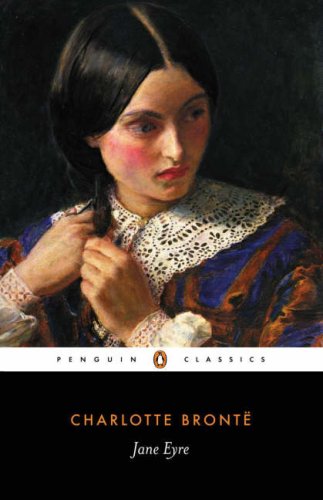
-          Thank goodness for being “forced” to read literature for a class. Despite being a while since I have opened its pages, Jane Eyre by Charlotte Bronte has stayed with me throughout my college career and will continue to remain one of my most beloved works. What about this work is so lasting to me? The answer, if there is such a thing, I believe boils down to three concepts: gothic background, character, and twisted love. Since my early youth when Edgar Allan Poe was my constant literary companion, gothic literature has held a place in my twisted little heart. The darkness, twists and turns, and elements of surrealism have mirrored my own journey through life. Second, Jane Eyre and I are kindred spirits who would have enjoyed many a conversation. In fact, maybe in a past life I was Jane Eyre if she had existed. Finally, twisted love has dotted the landscape of my life as well as hers. This created another level of mirroring and commonality between myself and the story. Thus, Jane Eyre has been and continues to be a work that stays with me.


2. What character or story has influenced something you've done?
-          Sometimes stories that touch the soul are chosen by someone else. During my student teaching career I came across Tuesdays with Morrie. It is the story of Morrie Schwartz and his battle with a disease that ultimately claims his life and reduces him to a feeble, physical shell of what he once was. Morrie knew he had months to live and what did he do? He passed on his wisdom and love for life in a series of talks to a former student. His courage and wisdom have influenced me to take a hard look at my life and appreciate the gift of each day.


3. What character or piece of literature seemed to relate to a recent news story or personal experience?
-          Edna from The Awakening by Kate Chopin relates to the recent news stories of bullied, gay adolescents taking their own lives. Despite the empowering message of Edna choosing to explore her own happiness outside of social conventions, Edna does ultimately take her own life because societal pressure to be a certain type of wife and mother eventually gets to her. The same happened to students who felt the pressure from society to be heterosexual. They recently took their own lives, despite trying to explore their own happiness. Society has yet to learn to let others alone and allow them to explore alternative paths of happiness.


4. What character has made you wonder why he or she did/said something?
-          I am attracted to the tortured loner whose only desire is to be loved and accepted. Thus, Christine’s refusal of the Phantom’s love in Phantom of the Opera and Esmerelda’s denial in Hunchback of Notre Dame are both examples of my gothic heart bleeding for my poor outcasts. In more ways than one I see myself as the lonely outcast who has felt the stinging palm of rejection. I shall never understand why normal, boring, stereotypically perfect specimens of manhood are more desirable. Therefore, Christine’s and Esmerelda’s rejection remains a mystery to me.


5. Name something from a work of literature (such as a character, setting, or quotation) that you find beautiful or vivid.
-          Copied below is John Donne’s “The Flea.” Metaphysical poetry has always been a fascination to me since the complex metaphors tie together so nicely into an unorthodox but congruent thought. “The Flea” is no exception. Making the comparison between being bitten by a flea and having sex is comical and philosophical gold that brings to light a vivid image as well as discussion.


THE FLEA.
by John Donne

MARK but this flea, and mark in this,
How little that which thou deniest me is ;
It suck'd me first, and now sucks thee,
And in this flea our two bloods mingled be.
Thou know'st that this cannot be said
A sin, nor shame, nor loss of maidenhead ;
Yet this enjoys before it woo,
And pamper'd swells with one blood made of two ;
And this, alas ! is more than we would do.

O stay, three lives in one flea spare,
Where we almost, yea, more than married are.
This flea is you and I, and this
Our marriage bed, and marriage temple is.
Though parents grudge, and you, we're met,
And cloister'd in these living walls of jet.
Though use make you apt to kill me,
Let not to that self-murder added be,
And sacrilege, three sins in killing three.

Cruel and sudden, hast thou since
Purpled thy nail in blood of innocence?
Wherein could this flea guilty be,
Except in that drop which it suck'd from thee?
Yet thou triumph'st, and say'st that thou
Find'st not thyself nor me the weaker now.
'Tis true ; then learn how false fears be ;
Just so much honour, when thou yield'st to me,
Will waste, as this flea's death took life from thee.